 By admin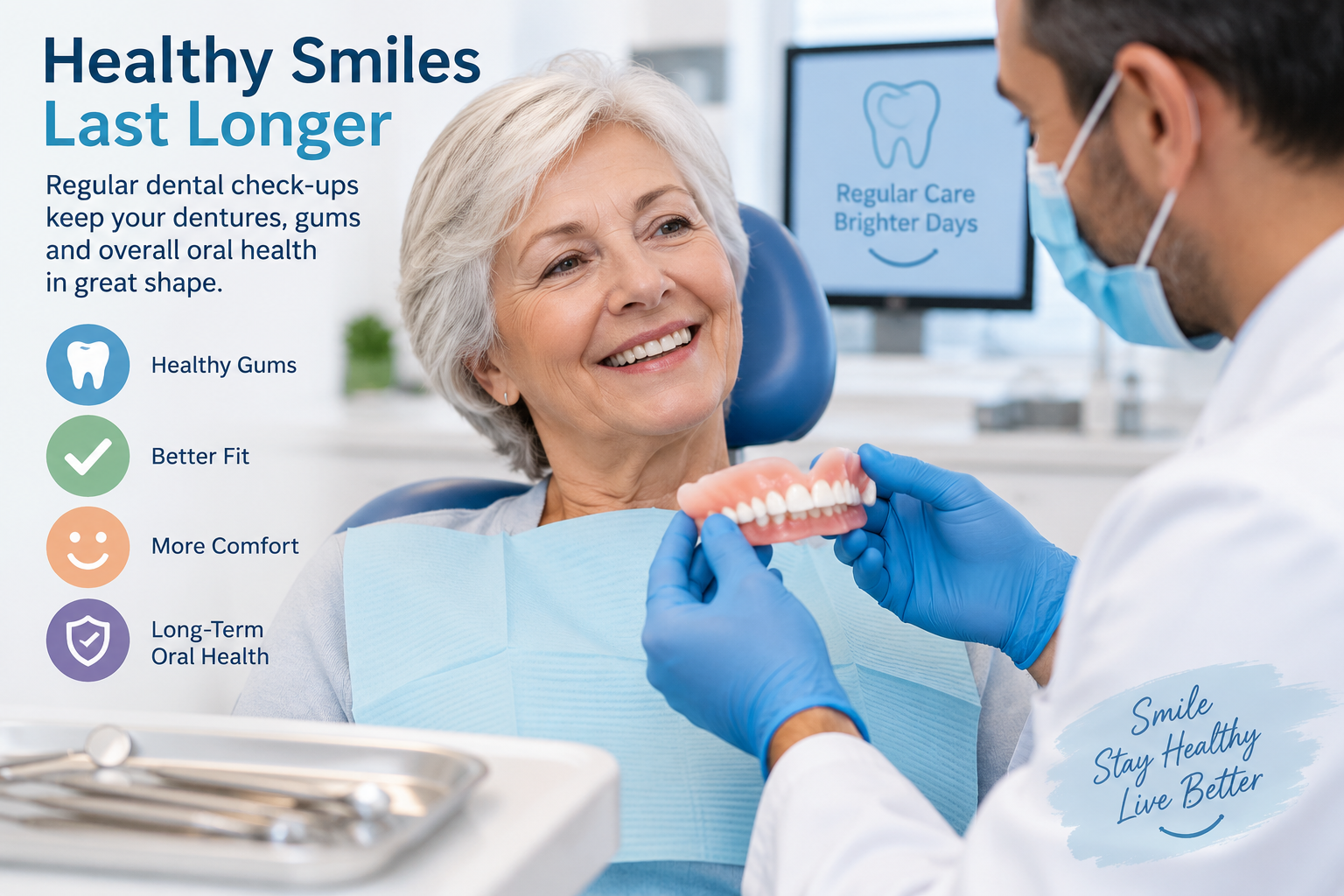
There is a common misconception that once natural teeth have been replaced with dentures, regular dental visits become less important. After all, if the original problem has been addressed, what could possibly go wrong? The reality is quite different. Losing natural teeth may change the way a person eats, speaks and smiles, but it does not bring oral health to a permanent standstill. In fact, the mouth continues to change throughout life, making ongoing dental care essential for people who wear dentures.
Dentures are designed to restore much more than the appearance of a complete smile. They can support facial structures, improve chewing ability and help people communicate comfortably. Yet they are not permanent replacements for living teeth and healthy oral tissues. Gums, jawbone, tongue and the surrounding tissues remain active biological structures that can change over time. Regular dental check-ups allow these changes to be monitored before minor concerns develop into more complicated problems.
Dentures Do Not Make the Mouth Maintenance-Free
Even well-designed dentures require care. Food particles, plaque and microorganisms can accumulate on dentures and in the mouth, particularly when cleaning routines are inconsistent. This can contribute to irritation, unpleasant odour, inflammation and conditions such as denture-related stomatitis.
A dental professional can examine the condition of the gums and other soft tissues while also checking the dentures themselves. Small cracks, worn teeth, rough surfaces or changes in fit may not always be obvious to the wearer. What initially feels like a minor inconvenience can gradually become a source of soreness or difficulty eating.
Regular appointments also provide an opportunity to reinforce effective cleaning and storage habits. Dentures generally need to be cleaned carefully, while the mouth itself should continue to receive attention even when few or no natural teeth remain.
The Mouth Continues to Change
One of the most important reasons for continuing dental check-ups is that the jawbone can gradually shrink after natural teeth are lost. Natural tooth roots stimulate the surrounding bone, and when those roots are no longer present, the bone may progressively resorb.
As the shape of the supporting tissues changes, previously comfortable dentures may become loose or unstable. A person might begin compensating by chewing differently, avoiding certain foods or using adhesives more frequently. These changes can happen gradually enough that someone simply assumes they are an unavoidable part of getting older.
They are not necessarily something that should simply be accepted.
A dentist can assess whether existing dentures still provide appropriate support and function. Depending on the circumstances, adjustment, relining, replacement or alternative tooth-replacement options may be considered.
Protecting the Tissues Beneath the Smile
The visible part of a smile is only one aspect of oral health. Underneath a denture, the gums and mucosal tissues deserve just as much attention.
Persistent redness, swelling, bleeding, ulcers or areas that do not heal should not be ignored. Ill-fitting dentures can create repeated friction and pressure, potentially causing sore spots and tissue irritation. Regular examinations give dental professionals the opportunity to identify unusual changes and determine whether further investigation is required.
This is particularly important because people can become accustomed to discomfort. A denture wearer may gradually alter eating habits or speaking patterns without recognising that the underlying problem is the fit of the prosthesis.
A check-up can therefore become less about repairing a problem and more about preventing one from becoming established.
Oral Health Is Connected to Everyday Life
The importance of continuing dental care also extends beyond the mouth. Eating comfortably is closely connected with nutrition and quality of life. Someone experiencing loose or painful dentures may begin avoiding firmer foods, choosing softer alternatives because they are easier to manage.
Likewise, difficulties with speech or denture stability can influence social confidence. This highlights the broader emotional impact of tooth loss. For many people, losing teeth is not simply a physical event; it can affect identity, confidence, social interaction and the willingness to smile.
Maintaining comfortable, functional dentures cannot reverse the experience of tooth loss, but it can help people regain a sense of normality in everyday activities. Being able to eat a meal without worrying about movement, speak without distraction and smile naturally can have meaningful psychological and social value.
Check-Ups Are About the Future, Not Just the Present
A comfortable set of dentures today does not guarantee the same experience several years from now. Oral tissues change, materials wear and personal circumstances evolve. Medications, general ageing and changes in oral hygiene can also influence the condition of the mouth.
For this reason, dental check-ups should be viewed as part of long-term maintenance rather than something reserved for moments of pain. The dentist can monitor oral tissues, assess denture fit and function, discuss cleaning practices and identify changes that may otherwise remain unnoticed.
There is also an important distinction between having a replacement smile and maintaining oral health. Dentures may replace the visible and functional aspects of missing teeth, but they do not replace the biological environment of the mouth.
A Lasting Smile Requires Ongoing Care
Dentures can restore confidence and everyday function, but they work best when supported by consistent professional care. Regular dental examinations help ensure that the prosthesis remains suitable while protecting the tissues that support it.
The most sustainable approach is therefore not to think of dentures as the final chapter of dental care. They are part of an ongoing relationship with oral health.
A smile can change dramatically after tooth loss, but oral care should never disappear with the natural teeth. For denture wearers, regular check-ups provide an opportunity to preserve comfort, detect problems early and maintain the foundations of a healthy mouth for years to come.