 By admin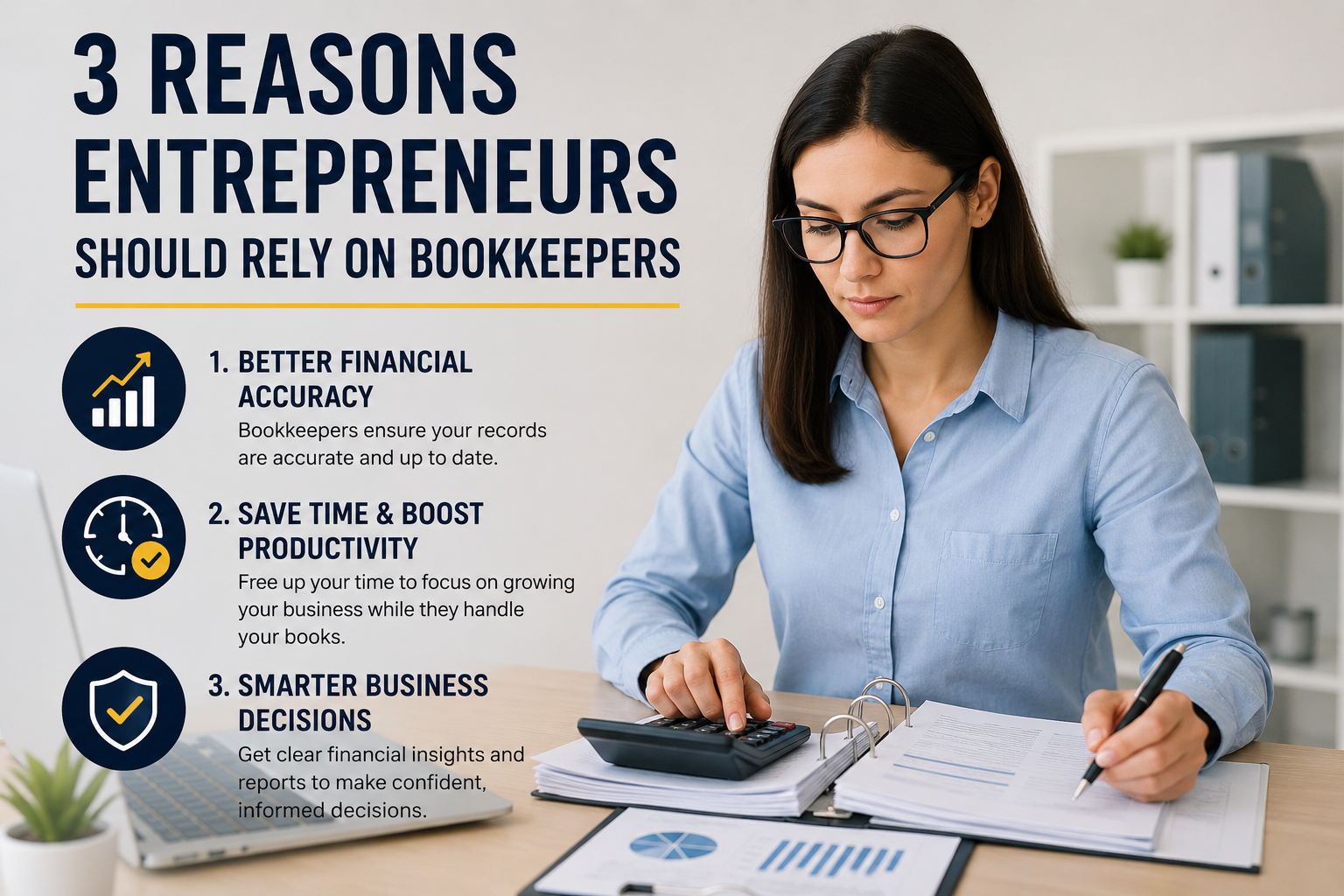
You might be feeling pulled in ten directions at once. You started your business to create something meaningful, yet your nights are now filled with receipts, invoices, and a growing sense that you are missing something important. The numbers never quite add up in your head, and you may have a quiet fear that a mistake in your books could cost you more than you can afford—unless you partner with a trusted bookkeeper in Coon Rapids.
At the same time, you might feel you “should” be able to handle it. It is your business, your money, your responsibility. So you push bookkeeping to the end of your to-do list, promise yourself you will “catch up this weekend,” and then feel guilty when you do not.
There is another way. Relying on a professional bookkeeper does not mean losing control. It means gaining clarity. In simple terms, a good bookkeeper helps protect you from financial blind spots, saves you time, and reduces the risk of internal fraud or costly errors. Those are the three core reasons entrepreneurs are better off not carrying this burden alone.
So, where does that leave you if you are already overwhelmed and unsure where to start with professional bookkeeping support for your business?
Why handling bookkeeping alone quietly wears you down
Picture this. It is late, you are exhausted, and you are staring at your accounting software trying to remember what that charge from three months ago was for. You are guessing on categories, skipping reconciliations, and hoping the IRS never asks too many questions.
The problem is not that you are careless. The problem is that you are human and your attention is split. Every hour you spend wrestling with your books is an hour you are not spending on sales, customers, product improvements, or simply resting so you can think clearly.
This tension shows up in a few ways.
Financially, small mistakes can snowball. Misclassified expenses, missed invoices, or late tax payments can lead to penalties, higher tax bills, or missed profit opportunities. Emotionally, the constant worry that you might be “doing it wrong” can follow you home and weigh on you even when you are off the clock.
Because of these pressures, many entrepreneurs end up doing the bare minimum. They scramble at tax time, hand a box of receipts to their tax preparer, and hope for the best. That approach keeps you reactive instead of proactive.
So, what changes when you rely on a bookkeeper instead?
Reason 1: A bookkeeper gives you clean numbers and clear decisions
When you think about outsourced bookkeeping for entrepreneurs, you might picture someone just entering transactions. A good bookkeeper does much more than that. They turn raw financial activity into reliable reports that actually mean something to you.
With accurate books, you can see which products or services are profitable, which customers pay slowly, and where your cash is really going each month. This clarity helps you decide whether to hire, whether to raise prices, or whether to cut a struggling offer.
Without that clarity, you are guessing. You might keep pushing a product that looks busy but barely breaks even. Or you might delay a smart hire because your gut tells you cash is tight, even when the numbers say you can afford it.
A bookkeeper keeps your records current and reconciled, so when you sit down to review your finances, you are looking at reality, not a rough estimate. That reduces stress and helps you act with confidence instead of fear.
Reason 2: Bookkeepers help protect you from hidden risks and fraud
Another reason entrepreneurs should rely on bookkeepers is risk management. Money creates temptation, and unstructured systems create opportunity. Many small business owners do not like to think about it, yet embezzlement and internal theft are more common than most expect. The “invisible crime of opportunity” often shows up in small, repeated acts that go unnoticed for years.
You can read more about how easily this can happen in a business in guidance on embezzlement as an invisible crime of opportunity. The patterns described there are not limited to big companies. They affect very small teams too.
A bookkeeper does not replace strong internal controls, yet they are a key part of your defense. By having someone independent track and reconcile accounts, match payments to invoices, and question unusual activity, you reduce the chance that something slips through unnoticed.
Good bookkeeping also supports your compliance and safety obligations. For example, if you have employees, contractors, or a physical workplace, your financial records connect directly to payroll, workers’ compensation, and safety-related costs. Resources like this guide on reviewing your workplace safety policies show how closely operations and financial responsibility are linked.
When your books are accurate, you can document that you are paying required taxes, funding safety measures, and handling payroll in a compliant way. That matters if you ever face an audit, investigation, or workplace incident.
Reason 3: You reclaim time and energy for the work only you can do
The third reason to lean on professional bookkeeping services is simple. Your time is finite. Every entrepreneur learns this the hard way. You cannot be the visionary, the salesperson, the operations manager, the marketer, and the bookkeeper without something breaking.
Bookkeeping is detailed work. It rewards consistency and focus. Most business owners try to squeeze it into evenings or weekends when their mental energy is already low. That is when errors happen. It is also when resentment builds, because you know you are sacrificing personal time for work that does not even feel like your true job.
By handing the books to a professional, you free up hours each month. More importantly, you free up mental bandwidth. You no longer carry the nagging thought “I really need to update the books” into every spare moment.
Those reclaimed hours can go into higher-value tasks like sales conversations, strategic planning, or training your team. Or they can go into rest and family time, which quietly supports every other decision you make in your business.
DIY bookkeeping vs hiring a bookkeeper: what is really at stake
You might still be weighing your options. After all, doing it yourself feels “free” on paper. It is helpful to look at the tradeoffs more clearly before you decide what is right for you right now.
| Area | DIY Bookkeeping | Relying On A Bookkeeper |
| Time Investment | Several hours per week or a stressful monthly catch-up session | Minimal. You provide documents and answer questions while the bookkeeper does the rest |
| Error Risk | Higher. Especially with changing tax rules and complex transactions | Lower. A trained person uses consistent methods and checks |
| Decision Quality | Based on partial or outdated numbers | Based on current, organized reports |
| Fraud Detection | Often incidental. Irregularities may go unnoticed for long periods | Regular reconciliations and reviews increase the chance of catching issues early |
| Stress Level | Guilt about falling behind, worry about tax time | Relief from having a partner focused on the numbers |
| Cost | No direct fee, but you lose billable or growth-focused hours | Monthly fee, but you gain time and reduce risk of costly mistakes |
| Support With Taxes & Payroll | Often confusing and time-consuming to manage alone | Bookkeeper can coordinate with tax pros and support payroll and reporting |
If you want a sense of how professional support is structured, you can review examples of bookkeeping, payroll, and tax preparation services that many small organizations rely on. The exact setup for your business may differ, yet the underlying idea is the same. You do not have to carry all of this by yourself.
Three steps you can take right now to get your books under control
You do not need to overhaul everything at once. A few focused moves can start shifting you from overwhelm to control.
1. Get your current financial picture on one page
Gather your latest bank statements, credit card statements, and any existing profit and loss or balance sheet reports. Even if they are messy, put them in one folder, digital or physical. Make a simple list of your accounts and payment tools. This gives you a clear starting point and helps a future bookkeeper understand your setup quickly.
2. Decide what you want your books to tell you every month
Before you look for help, ask yourself which questions you want your numbers to answer. For example. How much did I really earn this month? Which expenses are growing fastest? How much cash can I safely take out as owner pay? When you know what you care about, you can tell a bookkeeper what reports and breakdowns you need, instead of feeling lost in generic financial statements.
3. Explore professional bookkeeping options and ask clear questions
Reach out to potential bookkeepers or firms and ask about their experience with businesses your size and type. Ask how often they update books, what software they use, and how they handle communication. Clarify who will have access to your accounts and what controls they recommend. You are not just buying a service. You are choosing a partner who will see the financial heartbeat of your business.
Moving forward with more confidence and less financial stress
You started your business to create value, not to become a full-time bookkeeper by accident. The stress you feel around your numbers is not a sign of failure. It is a sign that you have reached a stage where doing everything yourself no longer serves you or your business.
Relying on a bookkeeper is not about giving up control. It is about building a stronger foundation, so your decisions are based on clear, accurate information and your time is freed for the work only you can do. Whether you choose help now or plan for it in the near future, you deserve financial systems that support you instead of draining you.
If you are feeling that quiet pull to stop guessing and start knowing where your business really stands, consider making bookkeeping support part of your next step. Your future self, and your business, will be grateful for the stability and calm that follows.