 By admin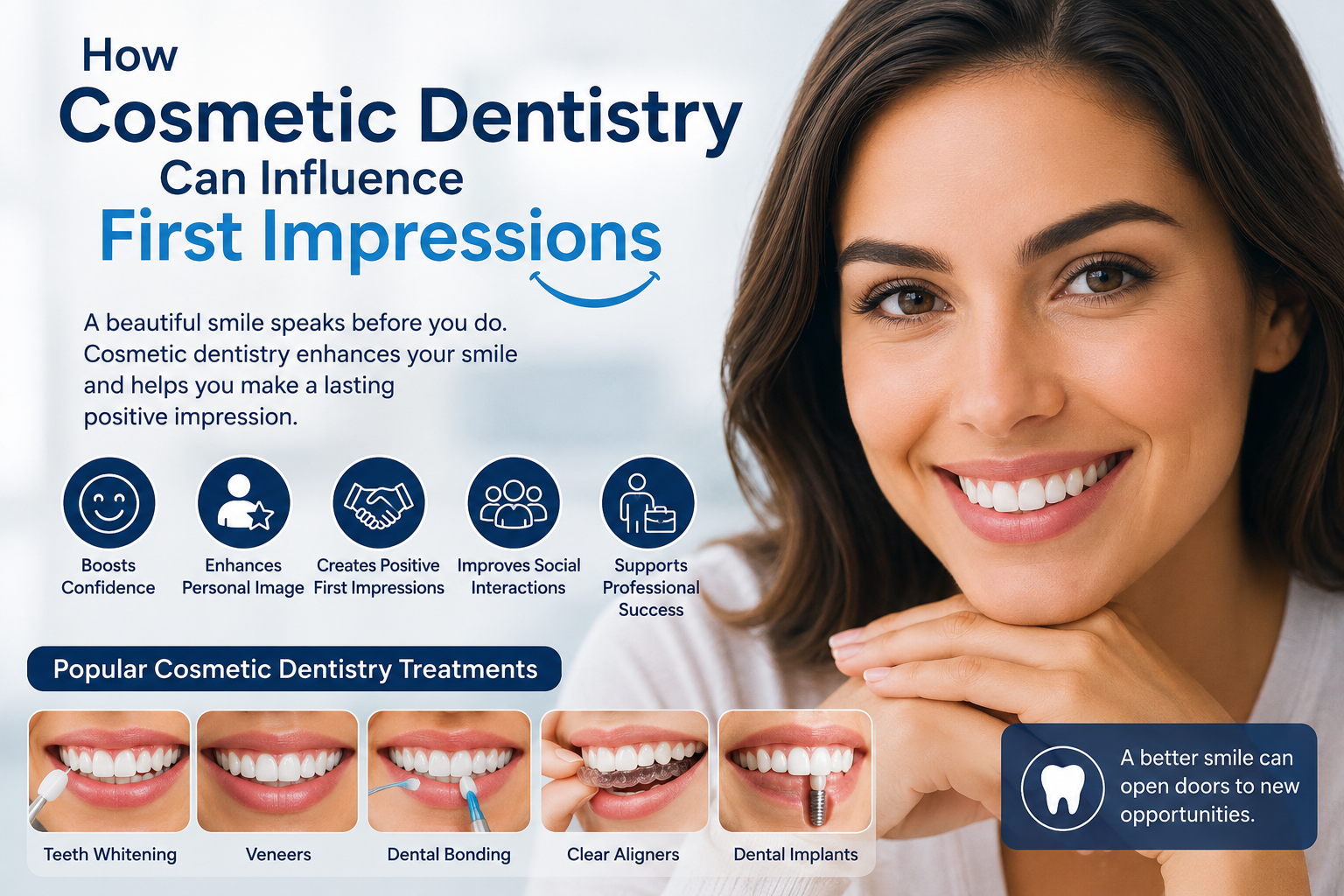
You might be wondering why something as simple as your smile can feel so complicated. Maybe you avoid photos, or you catch yourself covering your mouth when you laugh. You notice how quickly people seem to judge, and even if they never say anything, you feel it. That tiny pause when you first meet someone. That quick scan of your face and teeth. It can be exhausting, and it might be the right time to visit a dentist in Woodridge, Illinois.
Because of this, you may be torn. On one hand, you know your value is not defined by your teeth. On the other hand, you also live in a world where first impressions matter, and you can feel the impact in dating, job interviews, and even casual conversations. You might be thinking, “Is it shallow to care about this?” or “Am I overreacting?”
You are not overreacting. Research shows that smiles strongly shape how people judge attractiveness, health, and even trustworthiness in the first few seconds of meeting. Cosmetic dentistry steps into that space. It does not change who you are. It changes how clearly others can see your confidence. In simple terms, how cosmetic dentistry can influence first impressions comes down to three things. How others see you. How do you see yourself? How does that affect your behavior in every new interaction?
So, where does that leave you? It leaves you with options. You do not have to love every part of your smile to respect yourself. You can acknowledge the emotional weight this carries, and still explore what modern cosmetic dental care can do, at your own pace and on your own terms.
Why do people judge a smile so quickly, and what does the science say?
Think about the last time you met someone new. You probably formed an impression in seconds, long before you heard their full story. That is how humans are wired. Facial appearance, and especially teeth, are part of that snap judgment.
Studies on facial and dental attractiveness show this again and again. In one study on smile perception, people rated faces with aligned, healthy-looking teeth as more attractive and more socially approachable than those with visible dental issues. Another study found that altered tooth color and shape changed how observers rated a person’s social success and even their intelligence. This is not fair, but it is real.
Research on how smiles affect social judgments supports this pattern. For example, scientific work examining how tooth shade and alignment influence perceived attractiveness and professional success found that whiter and well-aligned teeth were consistently linked with more positive social and career-related judgments. You can see this in clinical research on smile aesthetics, such as studies on how tooth color and arrangement affect social perception, self confidence, and quality of life, including work on smile attractiveness and psychosocial impact in dental literature like research on esthetic dental treatments and patient satisfaction, and broader discussions of how physical appearance affects perceived health and social value in public health studies such as this analysis of body image and social evaluation, as well as work on how visible differences influence first impressions in clinical contexts like studies of facial appearance and social response.
Because of this, people with stained, chipped, crowded, or missing teeth often report feeling judged before they even speak. They may withdraw socially or smile less, which then reinforces the impression that they are cold or unfriendly. The problem is not just the teeth. It is the loop that starts around them.
This is where a cosmetic dentist can help. Treatments like whitening, bonding, veneers, and orthodontics do more than “fix” a tooth. They soften that first impression, so your personality has a chance to arrive before someone’s bias does.
How does cosmetic dentistry affect your confidence and daily life?
First impressions are not only about what others think. They are also about how you show up. If you are worried about your teeth, you might smile with your lips closed, avoid eye contact, or speak less. People may then read you as tense, uninterested, or insecure, even when you are none of those things.
Imagine two scenarios.
In the first, you walk into a job interview, already worried that the interviewer will notice your discolored front tooth. You become hyperaware of your mouth. You talk quickly, you do not smile much, and you leave feeling like you did not show your real self.
In the second, after addressing that tooth with conservative cosmetic treatment, you walk into the same kind of room. You still feel nervous, but you are not bracing for judgment about your smile. You look people in the eye. You smile when you greet them. You listen more clearly because you are not distracted by self-consciousness. The interviewer might not know why, but they experience you as more open and confident.
The change here is not only physical. It is emotional. Cosmetic dentistry often improves self-esteem and social comfort. Many patients say they laugh more, speak up more, and stop avoiding cameras. That shift alone can transform how others read you during those crucial first seconds.
So, when people talk about a “smile makeover” or cosmetic dental treatment for better first impressions, it is really about alignment between how you feel inside and what you are willing to show on the outside.
What should you weigh before choosing cosmetic dental treatment?
Of course, it is not as simple as “fix the teeth, fix everything.” There are real questions to think through. Cost. Time. Comfort. Long-term maintenance. You might also worry about looking “fake” or not like yourself.
To make it more concrete, here is a simple comparison that many people find helpful when thinking about whether to rely on quick fixes or to work with a cosmetic dentist for first impression concerns.
| Approach | What it usually involves | Short term benefits | Common risks or drawbacks | Impact on first impressions
|
| DIY or over the counter options | Whitening strips, online aligners, “snap on” teeth, cosmetic filters in photos | Lower upfront cost. Quick. Easy to buy and start at home. | Uneven or unnatural results. Possible sensitivity or gum irritation. No full mouth evaluation. May fail to address underlying dental issues. | Can help a little for mild staining, but often does not change how you feel about your smile in real-life interactions. |
| Professional cosmetic dentistry | In office whitening, bonding, veneers, crowns, orthodontics, contouring, or a combination | Personalized plan. Safer materials and methods. Can address both function and appearance. | Higher cost. Requires time for visits. Some treatments are permanent or long-lasting and need maintenance. | More natural, balanced improvement. Often leads to stronger confidence, which people notice quickly when they first meet you. |
Neither path is “right” for everyone. It depends on your goals, your budget, your tolerance for dental work, and how much your current smile is affecting your life. The key is to be honest about what you want. Do you just want your teeth a shade lighter for photos, or are you trying to change how you feel when you walk into a room?
Three practical steps you can take right now
1. Get clear on what actually bothers you
Instead of thinking “I hate my teeth,” try to name what specifically makes you uncomfortable. Is it color, shape, gaps, crowding, chips, or missing teeth? Stand in front of a mirror and smile as you would with a close friend. Then smile as you would in a formal setting. Notice the difference. Write down the top three things you would change if you could. This gives any cosmetic dentist a clear starting point and helps you stay focused on what matters most to you.
2. Learn about realistic options and limits
Spend a little time understanding what modern cosmetic dentistry can and cannot do. For example, whitening can lift many stains, but not all. Bonding and veneers can reshape teeth, but they have maintenance needs. Orthodontics can align teeth, but it takes time. Look for before and after photos, especially of people whose starting point looks similar to yours. You are not looking for perfection. You are looking for a result that feels like a more confident version of you, not a different person altogether.
3. Schedule a low pressure cosmetic consultation
When you feel ready, meet with a cosmetic dentist for an evaluation and conversation. This is not a commitment to treatment. It is a chance to share your concerns, hear what is possible, and get a sense of cost and timeline. Ask about conservative options first. Ask what they would do if you were their family member. Pay attention not only to their answers, but to how you feel in the chair. You deserve to feel heard, not rushed or pushed.
Where does this leave you with your smile and first impressions?
You do not have to love your smile overnight, and you do not have to apologize for caring about it. First impressions are powerful, and your teeth are part of that story, whether you like it or not. The good news is that modern cosmetic dentistry gives you tools, not pressure. You can choose small changes or bigger ones. You can move slowly. You can say no.
What matters is that you feel more like yourself when you meet someone new. If your current smile keeps you from doing that, it is reasonable to explore how a cosmetic dentist could help you shift those first few seconds in your favor and free up the energy you spend hiding or worrying.
You are not being shallow. You are simply taking your confidence seriously. If this has been weighing on you, consider taking one small step. Get informed, ask questions, and see what is possible. Your smile is part of how the world meets you, but it should never be a barrier to being seen for who you really are.