 By admin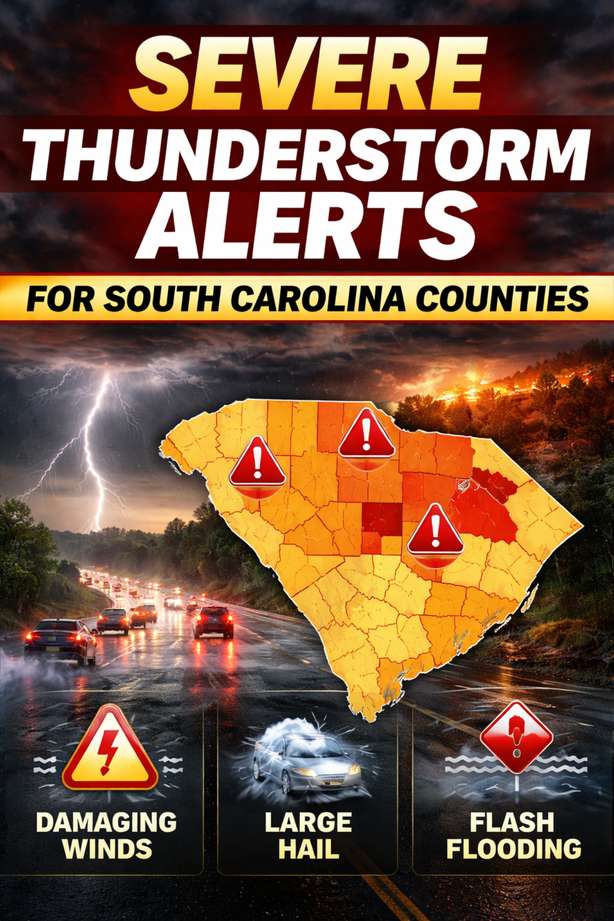
South Carolina often has strong storms. But when many severe thunderstorm alerts are issued for different counties, it means the weather is more dangerous than usual. These alerts warn people about storms that can cause strong winds, heavy rain, hail, lightning, and sometimes small tornadoes.
When many counties are under alert at the same time, storms can affect a large part of the state. This can lead to power cuts, flooded roads, fallen trees, and damage to homes and cars. Knowing what these alerts mean and what to do can help keep you and your family safe.
1. What Do Severe Thunderstorm Alerts Mean?
Weather offices use alerts to warn people about dangerous storms. There are different types of alerts.
Types of Alerts
| Alert Type | What It Means | What You Should Do |
|---|---|---|
| Severe Thunderstorm Watch | Storms may happen in your area | Stay alert and check the weather often |
| Severe Thunderstorm Warning | A severe storm is happening or about to happen | Go inside and take cover right away |
| Weather Statement | Storms are possible but not severe yet | Be careful and stay informed |
Why many alerts happen at once:
Storms move from one county to another. As they move, new alerts are sent out. This is why many counties can be under warning at the same time.
2. Why South Carolina Gets Many Severe Storms
South Carolina has warm air and wet air, which helps storms grow strong.
Reasons Storms Are Common
-
Warm air from the ocean
-
Moist air that helps clouds grow
-
Cold fronts moving in from the west
-
Weather changes in spring and summer
-
Flat land that lets storms move easily
Storms in Different Areas
| Area | Common Problems |
|---|---|
| Upstate | Strong winds, hail |
| Midlands | Heavy rain, flooding |
| Coastal areas | Lightning, heavy rain, strong winds |
3. Main Dangers From Severe Thunderstorms
Severe storms can cause different kinds of danger.
Main Dangers
-
Strong Winds
-
Can blow down trees
-
Can damage roofs and power lines
-
Can cause power outages
-
-
Hail
-
Can break windows
-
Can damage cars and roofs
-
Can hurt people and animals
-
-
Heavy Rain and Flooding
-
Roads can flood fast
-
Water can enter homes
-
Driving becomes dangerous
-
-
Lightning
-
Can strike suddenly
-
Can start fires
-
Can hurt people outdoors
-
-
Small Tornadoes (Sometimes)
-
Can cause damage in small areas
-
Hard to see, especially at night
-
Danger Comparison Table
| Danger | How Fast It Happens | Main Problems |
|---|---|---|
| Strong winds | Very fast | Fallen trees, power cuts |
| Hail | Very fast | Broken windows, car damage |
| Flooding | Fast | Water on roads, home damage |
| Lightning | Instant | Injury, fires |
| Small tornadoes | Very fast | Damage to buildings |
4. How These Storms Affect People and Towns
When storms hit many counties, many people can be affected.
Common Problems After Storms
-
Power goes out
-
Trees fall on roads and houses
-
Roads become blocked or flooded
-
Schools and events may close
-
Emergency workers get many calls
People Who Need Extra Care
| Group | Why They Need More Help |
|---|---|
| Older people | Harder to move quickly |
| People in rural areas | Help may take longer |
| Drivers | Roads can be dangerous |
| Outdoor workers | More risk from lightning |
5. What To Do: Before, During, and After Storms
Before the Storm
Simple Checklist:
-
Turn on weather alerts on your phone
-
Know the safest room in your home
-
Bring in loose outdoor items
-
Charge your phone and power bank
-
Keep a flashlight ready
During a Severe Thunderstorm Warning
Do These Things:
-
Go inside right away
-
Stay away from windows
-
Do not drive unless needed
-
Do not stand under trees
-
If water is on the road, do not drive through it
After the Storm
Stay Safe:
-
Do not touch fallen power lines
-
Avoid flooded areas
-
Check on neighbors
-
Take photos of damage when it is safe
-
Listen for more weather updates
Safety Actions Table
| Situation | What To Do |
|---|---|
| Strong winds | Stay inside, away from windows |
| Flooded road | Turn around, do not drive |
| Power outage | Use flashlight, not candles |
| Fallen power line | Stay away and call for help |
| Cleaning up | Wear gloves and strong shoes |
6. How To Stay Informed
Good information helps you stay safe.
Best Ways to Get Weather Updates
-
Weather alerts on your phone
-
Local TV and radio
-
County alert messages
-
Official weather websites
Tips
-
Do not trust rumors on social media
-
Check the time on weather updates
-
Follow advice from local officials
7. How To Be Ready for Future Storms
Storms will happen again, so it is good to be ready.
Long-Term Safety Steps
-
Trim trees near your home
-
Fix loose roof parts
-
Make a family plan for storms
-
Teach children what to do
-
Keep emergency supplies ready
Preparedness Table
| Area | Action | Why It Helps |
|---|---|---|
| Home | Fix roof, trim trees | Less damage |
| Family | Make safety plan | Faster action |
| Community | Help neighbors | Safer area |
| Phone | Turn on alerts | Early warning |
Final Words
When many severe thunderstorm alerts are sent out in South Carolina, it means people should take the weather seriously. These storms can cause strong winds, heavy rain, flooding, hail, and power cuts. Even if the storm passes quickly, the damage can last longer.
The best way to stay safe is to stay informed, prepare early, and act quickly when warnings are given. Simple steps like going indoors, avoiding flooded roads, and checking on neighbors can protect lives. Being ready before storms arrive helps families and communities stay safer during every storm season.