 By admin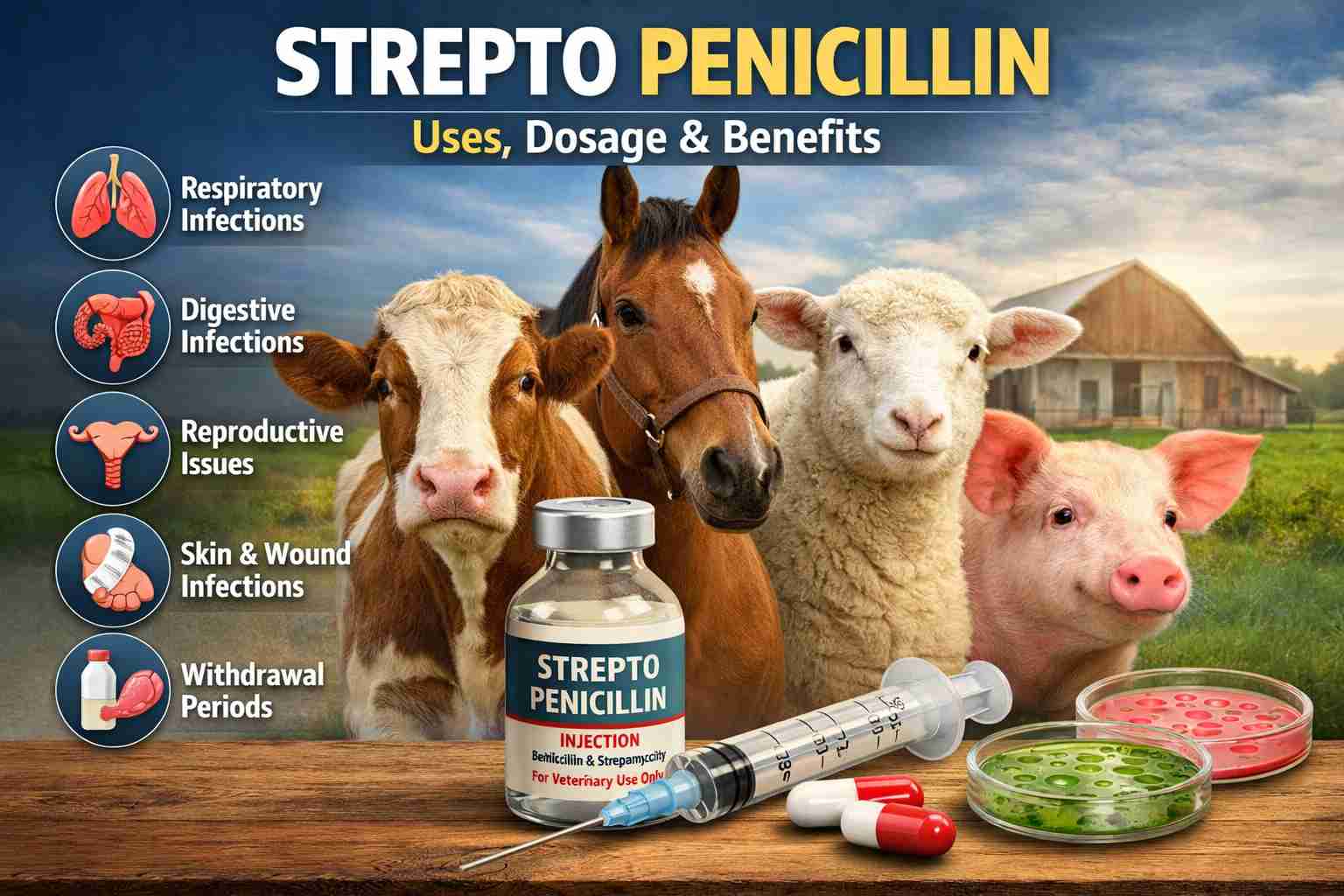
Strepto penicillin is a commonly used antibiotic medicine in veterinary care. It is mainly used to treat bacterial infections in animals such as cattle, sheep, goats, horses, and pigs. This medicine combines two antibiotics—penicillin and streptomycin—to fight many types of bacteria.
Because these two antibiotics work in different ways, their combination helps kill bacteria more effectively. Strepto penicillin is widely used by veterinarians to treat infections that affect the lungs, digestive system, reproductive organs, and skin of animals.
This article explains what strepto penicillin is, how it works, its uses, dosage guidelines, benefits, side effects, and precautions.
What is Strepto Penicillin?
Strepto penicillin is a combination antibiotic injection used in veterinary medicine. It contains two active ingredients:
-
Penicillin
-
Streptomycin
Both medicines help stop the growth of harmful bacteria and treat infections in animals.
Antibiotic Components
| Component | Type of Antibiotic | Main Function |
|---|---|---|
| Penicillin | Beta-lactam antibiotic | Damages bacterial cell walls |
| Streptomycin | Aminoglycoside antibiotic | Stops bacteria from making proteins |
By combining these two medicines, strepto penicillin can treat many kinds of bacterial infections.
How Strepto Penicillin Works
The two medicines in strepto penicillin work together to kill bacteria.
Penicillin Action
Penicillin destroys bacteria by breaking down their cell walls. Without a strong cell wall, the bacteria cannot survive.
Streptomycin Action
Streptomycin stops bacteria from making proteins needed for growth and survival.
Combined Effect
When these two medicines work together:
-
Bacteria become weak
-
Bacteria cannot grow
-
The infection begins to clear
This makes strepto penicillin effective for different types of infections.
Bacteria Treated by Strepto Penicillin
Strepto penicillin works against many bacteria that cause infections in animals.
Common Bacteria
-
Streptococcus
-
Staphylococcus
-
Clostridium
-
Pasteurella
-
Salmonella
-
E. coli
Bacteria and Infections Table
| Bacteria | Common Infection |
|---|---|
| Streptococcus | Respiratory infections |
| Staphylococcus | Skin infections |
| Clostridium | Wound infections |
| Pasteurella | Lung infections |
| E. coli | Digestive infections |
Because of this wide coverage, strepto penicillin is considered a broad-spectrum antibiotic.
Uses of Strepto Penicillin
Veterinarians use strepto penicillin to treat many bacterial diseases in animals.
1. Respiratory Infections
Respiratory infections affect the lungs and breathing system of animals.
Common diseases include:
-
Pneumonia
-
Bronchitis
-
Shipping fever
-
Upper respiratory infections
These infections are common in cattle and sheep.
2. Digestive System Infections
Bacterial infections can affect the stomach and intestines of animals.
Strepto penicillin may help treat:
-
Bacterial diarrhea
-
Enteritis (intestinal infection)
-
Digestive infections
Early treatment helps animals recover faster.
3. Reproductive and Urinary Infections
Some infections affect the reproductive organs and urinary system.
Examples include:
-
Metritis (uterus infection)
-
Pyometra
-
Urinary tract infections
Treating these infections helps maintain animal fertility and health.
4. Skin and Wound Infections
Animals may develop infections in their skin or wounds.
Common conditions treated include:
-
Abscesses
-
Wound infections
-
Foot rot
-
Skin infections
These infections often happen after injuries.
Read also: How to Fix Tech Neck
5. Mastitis
Mastitis is an infection of the udder in dairy animals.
Treatment with antibiotics can help:
-
Reduce swelling
-
Control infection
-
Improve milk production
Animals Treated with Strepto Penicillin
This antibiotic is used in many farm animals and some pets.
Common Animals
-
Cattle
-
Sheep
-
Goats
-
Horses
-
Pigs
-
Dogs and cats (sometimes)
Animals and Infections Table
| Animal | Common Diseases Treated |
|---|---|
| Cattle | Pneumonia, mastitis |
| Sheep | Respiratory infections |
| Goats | Digestive infections |
| Horses | Skin infections |
| Pigs | Respiratory infections |
Dosage and Administration
Strepto penicillin is usually given as an injection.
Route of Injection
The most common method is:
-
Intramuscular injection (IM)
This means the medicine is injected into the muscle.
General Dosage Guidelines
The dosage depends on:
-
Animal type
-
Body weight
-
Type of infection
-
Veterinary advice
Treatment may involve:
-
Daily injections
-
Treatment for several days
Because animals are different sizes, a veterinarian should decide the correct dose.
Benefits of Strepto Penicillin
Strepto penicillin has several advantages in animal treatment.
Key Benefits
-
Treats many types of bacteria
-
Works well for mixed infections
-
Widely available in veterinary clinics
-
Affordable medicine for livestock
-
Useful for many animal species
These benefits make it a common antibiotic in farming and veterinary care.
Possible Side Effects
Most animals tolerate strepto penicillin well, but some side effects may occur.
Common Side Effects
-
Swelling at injection site
-
Mild pain after injection
-
Digestive upset
Rare Side Effects
-
Allergic reaction to penicillin
-
Kidney problems
-
Ear problems (very rare)
If an animal shows unusual symptoms, a veterinarian should be contacted.
Precautions
Before using strepto penicillin, some precautions should be followed.
Important Safety Tips
-
Do not use in animals allergic to penicillin
-
Use the correct dose recommended by a veterinarian
-
Do not stop treatment early
-
Avoid overdose
Using antibiotics responsibly helps protect animal health.
Withdrawal Period
For animals used for food, a withdrawal period is required. This means the animal’s products cannot be used for food immediately after treatment.
Withdrawal Period Table
| Product | Waiting Time |
|---|---|
| Milk | A few days after treatment |
| Meat | Several weeks depending on medicine |
This ensures that no antibiotic residue enters the food supply.
Storage Instructions
Proper storage keeps the medicine effective.
Storage Guidelines
-
Store in a cool and dry place
-
Protect from sunlight
-
Follow manufacturer temperature instructions
-
Keep away from children
Incorrect storage may reduce the medicine’s effectiveness.
Preventing Antibiotic Resistance
Using antibiotics correctly helps prevent antibiotic resistance, which occurs when bacteria become harder to treat.
Good Practices
-
Use antibiotics only when needed
-
Follow the full treatment plan
-
Use the correct dose
-
Always follow veterinary advice
Responsible antibiotic use helps keep medicines effective.
Conclusion
Strepto penicillin is a useful antibiotic combination for treating bacterial infections in animals. It combines penicillin and streptomycin to fight a wide range of bacteria that cause diseases in livestock and other animals. Veterinarians use this medicine to treat respiratory infections, digestive diseases, reproductive infections, and skin problems. Its broad antibacterial activity, low cost, and effectiveness make it an important treatment in veterinary medicine. However, strepto penicillin should always be used carefully and under veterinary guidance. Proper dosing, correct storage, and following withdrawal periods help ensure safe and effective treatment for animals and protect public health.