 By admin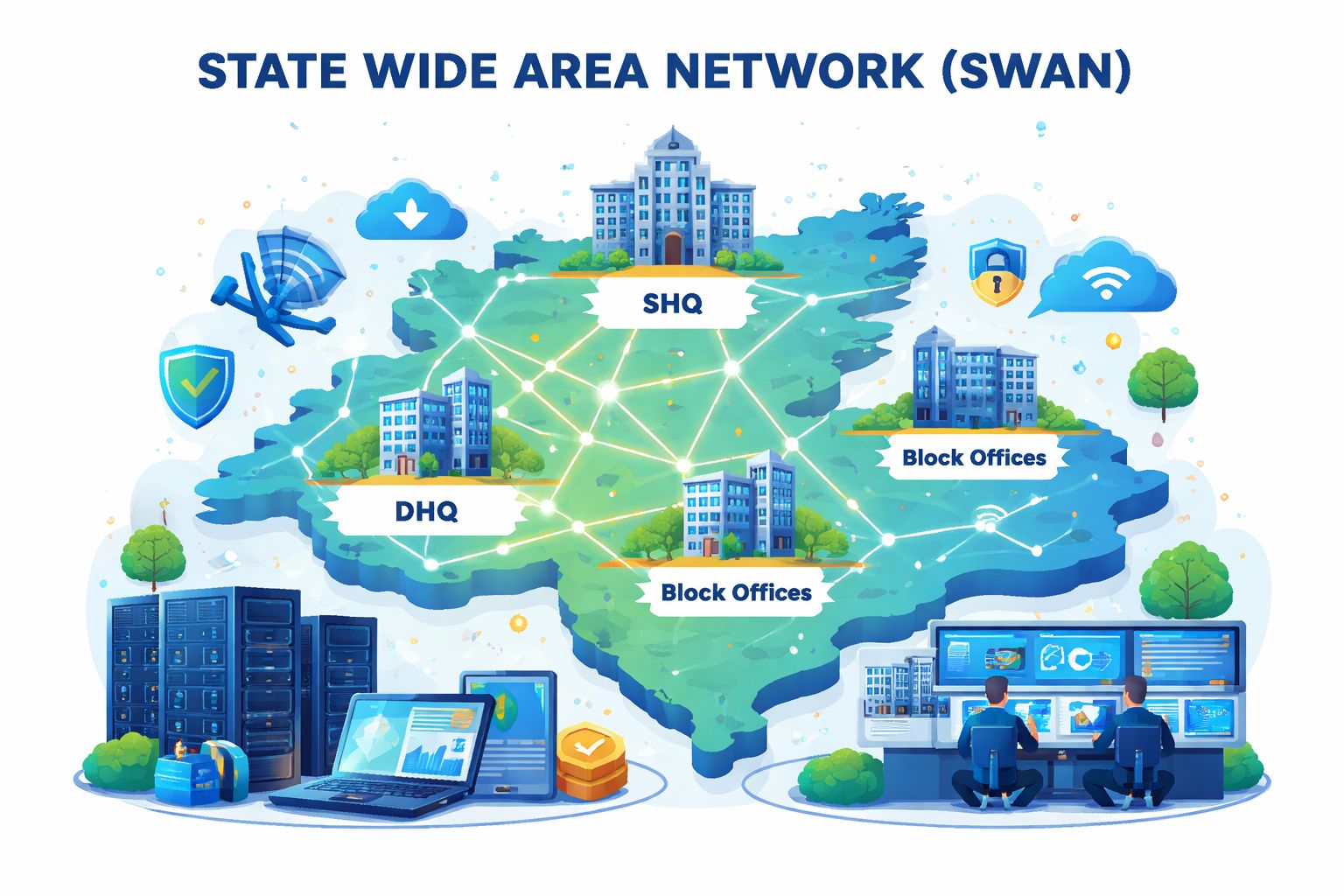
In today’s digital world, governments and large organizations need strong communication systems to connect offices located in different areas. One important network used for this purpose is the State Wide Area Network (SWAN). A State Wide Area Network is a communication network that connects government offices across an entire state. It helps different departments share information, communicate quickly, and provide services to citizens more efficiently. SWAN works as a digital backbone for government operations. It allows departments such as health, education, police, and administration to stay connected through a secure and reliable network. This article explains what a State Wide Area Network is, how it works, its architecture, features, benefits, applications, and future importance.
Table of Contents
ToggleIntroduction to State Wide Area Network
A State Wide Area Network (SWAN) is a large network that connects government offices across a state. It allows different administrative units to communicate and share information easily.
The network usually connects:
-
State government headquarters
-
District offices
-
Block or local government offices
-
Government service centers
The main goal of SWAN is to create a secure and fast communication system that helps government departments work together smoothly. With SWAN, officials can send data, make video calls, share documents, and access central databases without delay.
What is a State Wide Area Network?
A State Wide Area Network is a special type of wide area network (WAN) designed for government communication across a state. It connects many government offices using high-speed internet and networking technologies. This allows departments to access important information from a central system.
SWAN supports several types of communication such as:
-
Data transfer
-
Voice communication
-
Video conferencing
-
Online government services
Because of SWAN, government services can reach citizens faster and more efficiently.
Objectives of State Wide Area Network
The main purpose of SWAN is to improve government communication and service delivery.
Main Objectives
-
Connect government offices across the state
SWAN links different government departments so they can communicate easily. -
Support e-governance services
Many government services are now available online, and SWAN provides the network needed for these services. -
Improve communication between departments
Government officials can quickly share information and coordinate tasks. -
Provide secure communication
Sensitive government data is protected through secure network technologies. -
Support voice, data, and video services
SWAN allows video meetings, phone calls, and digital communication.
Architecture of State Wide Area Network
A State Wide Area Network usually follows a three-level structure that connects different administrative levels.
Three-Tier Architecture
| Level | Description | Role |
|---|---|---|
| State Headquarters (SHQ) | Main government office | Central network control |
| District Headquarters (DHQ) | Regional government offices | Connect districts with the state center |
| Block Headquarters (BHQ) | Local administrative offices | Provide services at the local level |
This structure helps information move smoothly from the state level to local offices.
Important Components of SWAN
Several technical parts are needed to run a statewide network.
| Component | Purpose |
|---|---|
| Network Operation Center (NOC) | Monitors the entire network |
| Points of Presence (PoPs) | Locations where networking equipment is installed |
| Core Network | Main high-speed communication link |
| Access Network | Connects local offices to the main network |
These components make sure the network works smoothly and efficiently.
Technologies Used in SWAN
State Wide Area Networks use modern technologies to provide fast and reliable communication.
Common Technologies
-
Fiber optic cables for high-speed data transmission
-
Routers and switches to manage network traffic
-
VPN (Virtual Private Network) for secure communication
-
MPLS technology for better data flow management
New Technologies
Some SWAN systems are now using modern technologies such as:
-
SD-WAN (Software Defined WAN)
-
Cloud networking
-
5G connectivity
-
AI-based network monitoring
These technologies make the network faster, smarter, and more flexible.
Key Features of State Wide Area Network
SWAN provides many useful features that help governments operate efficiently.
Major Features
-
High-speed connectivity across the state
-
Secure communication system
-
Centralized network monitoring
-
Reliable network infrastructure
-
Scalable design for future expansion
Feature Overview
| Feature | Explanation |
|---|---|
| High Speed | Allows fast transfer of data |
| Security | Protects government information |
| Central Control | Network can be managed from a central location |
| Scalability | Network can expand as needed |
| Reliability | Backup systems reduce network failures |
Applications of State Wide Area Network
SWAN is used in many government operations and public services.
Major Applications
-
E-governance services
-
Government communication systems
-
Video conferencing between offices
-
Centralized data sharing
-
Online citizen services
Examples of Use
| Application | Purpose |
|---|---|
| Digital Governance | Provides online services to citizens |
| Data Sharing | Departments share important information |
| Video Meetings | Officials communicate remotely |
| Disaster Management | Helps coordinate emergency response |
| Public Service Delivery | Improves service access for citizens |
These applications help governments work more efficiently.
Benefits of State Wide Area Network
Implementing a State Wide Area Network provides many advantages.
Major Benefits
-
Faster communication between government offices
-
Better public service delivery
-
Reduced communication costs
-
Improved coordination between departments
-
Secure sharing of information
Read also: Freelancer vs. Business Owner
Benefit Summary
| Benefit | Impact |
|---|---|
| Faster Communication | Speeds up government operations |
| Better Services | Citizens receive services quickly |
| Cost Savings | Shared network reduces expenses |
| Better Coordination | Departments work together easily |
| Secure Data | Protects sensitive government information |
Challenges of State Wide Area Network
Although SWAN offers many benefits, there are some challenges in building and maintaining such a large network.
Common Challenges
-
High cost of infrastructure
-
Need for continuous maintenance
-
Cybersecurity risks
-
Network connectivity in remote areas
-
Need for regular technology upgrades
Challenge Overview
| Challenge | Description |
|---|---|
| High Cost | Building large networks requires major investment |
| Maintenance | Networks need skilled technicians |
| Security Risks | Networks must be protected from cyber attacks |
| Rural Connectivity | Difficult to connect remote areas |
| Technology Updates | Networks must be upgraded over time |
Future of State Wide Area Networks
The future of SWAN will be influenced by new technologies and digital transformation.
Future Trends
-
Greater use of cloud computing
-
Adoption of SD-WAN technology
-
Expansion of 5G networks
-
Use of Artificial Intelligence for network monitoring
-
Improved cybersecurity systems
These improvements will make SWAN networks more efficient, faster, and more secure.
Conclusion
A State Wide Area Network (SWAN) is an important communication system that connects government offices across a state. It helps departments communicate, share data, and deliver services more efficiently. By providing high-speed connectivity, secure communication, and centralized network management, SWAN supports modern digital governance. As governments continue to adopt digital services, cloud technologies, and smart administration, State Wide Area Networks will become even more important in improving government operations and citizen services.