 By admin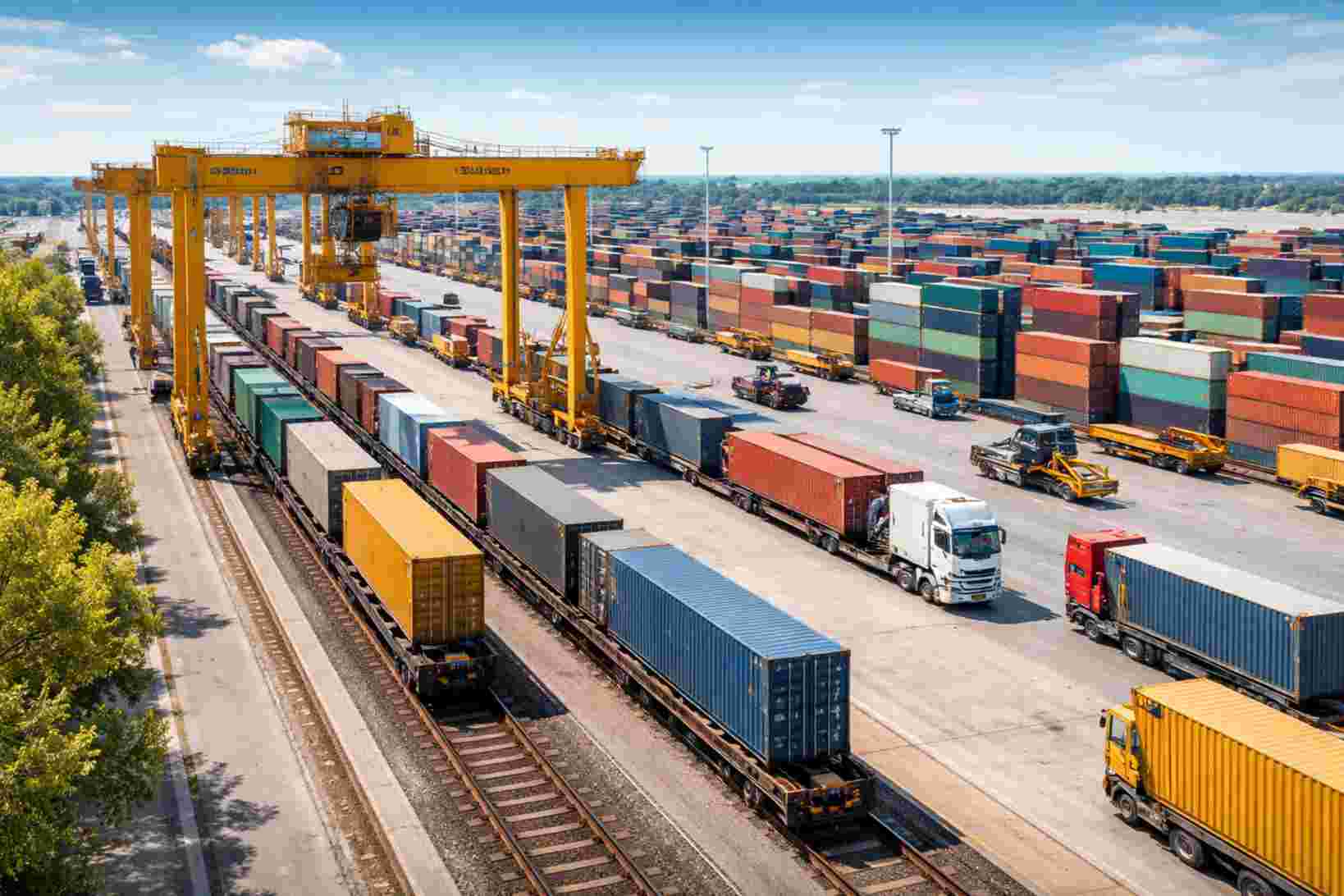
Moving goods from one place to another is an important part of business and trade. As trade grows, many public freight terminals like ports and rail yards become crowded. This causes delays, long waiting times for trucks and trains, and higher costs for companies.
To solve these problems, many companies are now using Private Freight Terminals (PFTs). A private freight terminal is a place where goods are loaded, unloaded, stored, and moved, but it is owned and run by a private company instead of the government. These terminals help companies move their goods faster, with better control and fewer delays.
Private freight terminals are becoming more important as supply chains become bigger and more complex. They help improve the flow of goods and make transport more reliable.
What is a Private Freight Terminal?
A Private Freight Terminal is a place where goods are handled for transport. It is built and operated by a private company for its own use or for selected customers.
Main features of a private freight terminal
-
Owned and managed by a private company
-
Used by selected users or customers
-
Connected to transport modes like rail and road
-
Built to suit specific types of goods
-
Located near factories, warehouses, or ports
Public vs Private Freight Terminals
| Point | Public Freight Terminal | Private Freight Terminal |
|---|---|---|
| Owner | Government or port body | Private company |
| Who can use it | Anyone who pays the fee | Only approved users |
| Waiting time | Often long | Usually short |
| Flexibility | Low | High |
| Control | Shared with many users | Controlled by owner |
Types of Freight Terminals
There are different kinds of freight terminals. A private freight terminal can be one or more of these types.
Common types
-
Public freight terminals
-
Private freight terminals
-
Intermodal terminals (for rail and road)
-
Inland container depots
-
Port terminals
-
Bulk cargo terminals
A private freight terminal can work as an intermodal terminal or container depot. What makes it “private” is who owns and runs it.
Main Parts of a Private Freight Terminal
A private freight terminal has many parts that work together.
Basic parts
1. Transport connections
-
Rail tracks connected to the main rail line
-
Roads for trucks
-
Internal roads inside the terminal
2. Storage areas
-
Open yards
-
Covered warehouses
-
Special storage for cold goods (if needed)
3. Handling equipment
-
Cranes
-
Forklifts
-
Reach stackers
-
Loaders
4. Simple digital systems
-
Software to manage entries and exits
-
Systems to track goods
-
Booking systems for trucks
5. Safety and security
-
Gates and fences
-
Cameras
-
Fire safety systems
Read also: qlcredit
Equipment by cargo type
| Type of goods | Main equipment used |
|---|---|
| Containers | Cranes, reach stackers |
| Bulk goods | Loaders, conveyors |
| Vehicles | Ramps, vehicle carriers |
| Food items | Cold storage, forklifts |
| Factory goods | Warehouses, forklifts |
How a Private Freight Terminal Works
Private freight terminals are planned to work smoothly and with less waiting time.
Simple work process
-
Before arrival
-
Time slots are booked for trucks and trains
-
Documents are prepared
-
-
Arrival
-
Trucks or trains enter the terminal
-
Security check at the gate
-
-
Loading and unloading
-
Goods are taken off or put onto vehicles
-
Goods are moved to storage areas
-
-
Extra services (if needed)
-
Packing
-
Labeling
-
Grouping small loads into one
-
-
Dispatch
-
Goods are loaded onto trucks or trains
-
Goods leave the terminal for delivery
-
Why this process is better
-
Less waiting time
-
Faster loading and unloading
-
Better planning of vehicle movements
-
Fewer traffic jams inside the terminal
Benefits of Private Freight Terminals
Private freight terminals offer many advantages to companies.
Main benefits
-
Less congestion and shorter queues
-
Faster movement of goods
-
Better control over operations
-
Lower delays and damage
-
Terminals can be designed for special goods
-
Better planning of transport schedules
-
More reliable supply chains
Business benefits vs daily operation benefits
| Business benefits | Daily operation benefits |
|---|---|
| Lower long-term transport cost | Faster truck turnaround |
| Better customer service | Shorter loading time |
| More control over supply chain | Less congestion |
| Stronger business planning | Better scheduling |
Problems and Challenges
Private freight terminals also have some challenges.
Common challenges
-
High cost to build the terminal
-
Need to buy or lease land
-
Permission and approval from authorities
-
Dependence on rail and road networks
-
Risk if not enough goods pass through the terminal
-
Cost of maintenance and staff
Risk and solution table
| Problem | Possible solution |
|---|---|
| High building cost | Build in phases |
| Low usage | Long-term contracts with customers |
| Delay in approvals | Early talks with authorities |
| Traffic outside terminal | Use multiple routes |
Rules and Government Policies
In many countries, private freight terminals must follow government rules, especially if they connect to rail networks.
Common rules
-
Permission to connect to rail lines
-
Safety rules
-
Environmental rules
-
Payment of rail usage fees
-
Land use and zoning rules
Rules change from country to country, so companies must check local laws before building a private freight terminal.
Who Uses Private Freight Terminals?
Private freight terminals are used by many industries.
Main users
-
Factories and manufacturing companies
-
Car makers and car parts suppliers
-
Steel and cement companies
-
Import and export companies
-
Large warehouses and online shopping companies
-
Food and farm product companies
Examples of use
| Industry | How they use the terminal |
|---|---|
| Factory | Ship goods directly by rail |
| Car company | Move parts in and cars out |
| Online store | Supply large warehouses |
| Bulk goods | Move heavy materials in large amounts |
Future of Private Freight Terminals
Private freight terminals will become more important in the future.
Future trends
-
More use of rail instead of road to reduce pollution
-
Use of simple automation for loading and tracking
-
Use of digital systems for better planning
-
Terminals built near big industrial areas
-
Use of green energy like solar power
Conclusion
Private freight terminals help companies move goods in a faster and more organized way. They reduce congestion at public terminals and give businesses more control over how their goods are handled.
Even though building a private freight terminal costs a lot of money and needs government approval, the long-term benefits are strong. These terminals help reduce delays, improve planning, and make supply chains more reliable.
As trade grows and logistics become more important, private freight terminals will continue to play a key role in moving goods smoothly and efficiently.