 By admin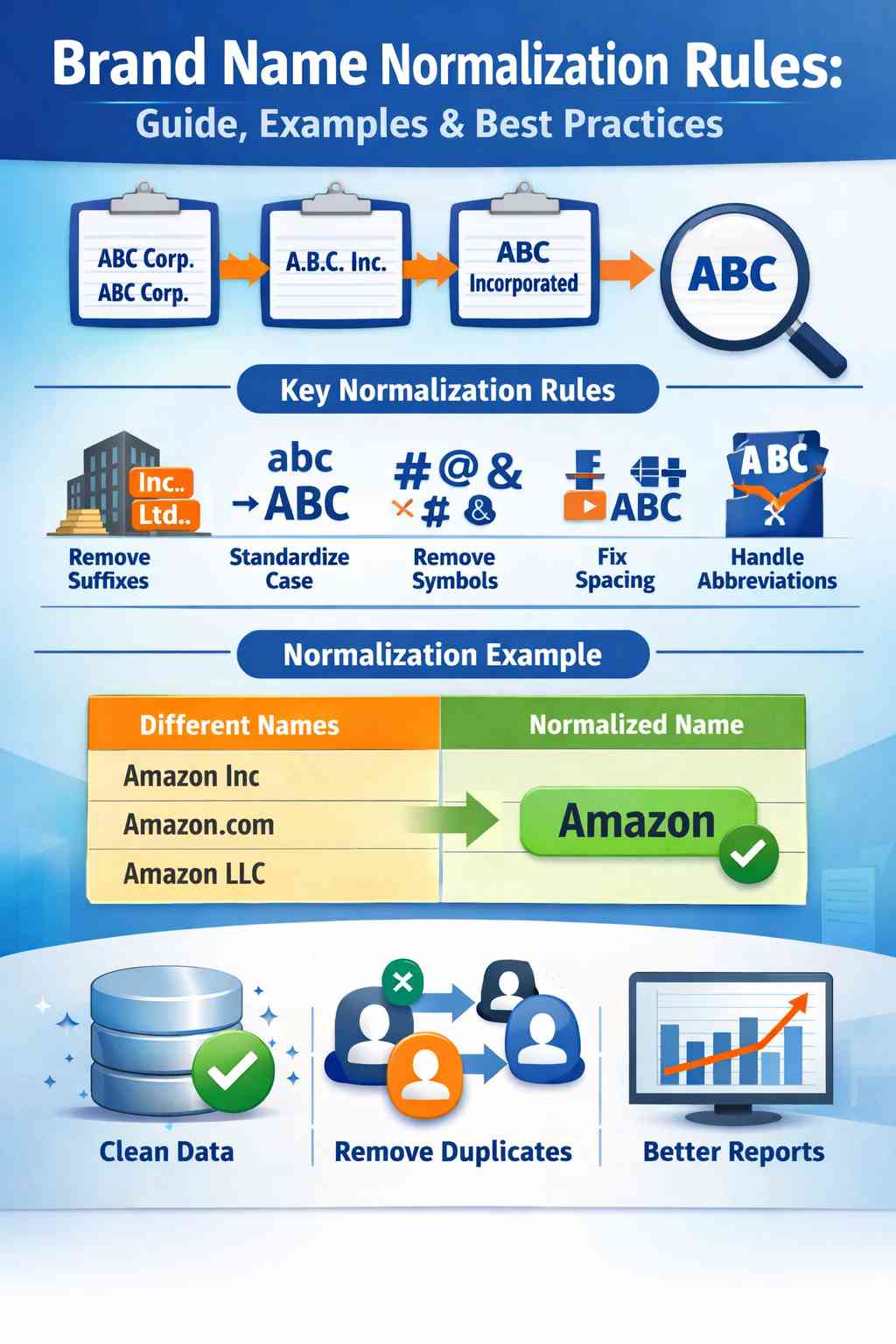
In many companies, brand names appear in different systems such as CRM software, marketing platforms, spreadsheets, and databases. Over time, the same brand name may appear in many different forms because of manual data entry, spelling differences, abbreviations, or formatting mistakes.
For example, the same company might appear in a dataset like this:
-
Microsoft
-
Microsoft Corp
-
Microsoft Corporation
-
MICROSOFT INC
Although all these records refer to the same company, a system might treat them as different brands. This creates problems in reports, analytics, and customer records. Brand name normalization solves this problem. It is the process of converting different versions of a brand name into one standard form. When companies apply normalization rules, their data becomes cleaner, more organized, and easier to analyze. This article explains brand name normalization rules using simple language, lists, and tables.
What Is Brand Name Normalization
Brand name normalization means converting many versions of the same brand name into one consistent name.
Example
| Different Versions | Normalized Brand |
|---|---|
| IBM Corp | IBM |
| IBM Corporation | IBM |
| I.B.M | IBM |
| International Business Machines | IBM |
Instead of keeping many different versions, all records are standardized to IBM. This makes the data easier to manage and analyze.
Why Brand Name Normalization Is Important
Brand name normalization helps companies manage their data better. Below are some key reasons why it is important.
1. Better Data Quality
When brand names are standardized, the data becomes cleaner and more reliable.
Benefits include:
-
Fewer mistakes in the database
-
More consistent records
-
Easier data management
2. Accurate Reports and Analytics
If the same brand appears in different formats, reports may show incorrect results.
Example
| Brand Name | Sales |
|---|---|
| Amazon Inc | $50,000 |
| Amazon.com | $70,000 |
| Amazon | $120,000 |
Without normalization, the report shows three different brands.
After normalization:
| Brand | Sales |
|---|---|
| Amazon | $240,000 |
This gives a correct and clear report.
3. Fewer Duplicate Records
Small differences in brand names often create duplicate entries in systems.
Normalization helps:
-
Combine duplicate records
-
Keep the database clean
-
Reduce confusion
4. Better Search Results
Search systems and software tools work better when brand names follow a consistent format.
Normalization improves:
-
Data matching
-
Search accuracy
-
AI recognition
5. Consistent Brand Representation
Customers may see brand names on websites, emails, reports, or customer portals. Using a consistent name everywhere builds a stronger brand image.
Core Brand Name Normalization Rules
Companies use several simple rules to standardize brand names.
1. Choose a Standard Brand Name
The first step is selecting a standard (canonical) brand name for each company. All variations should be converted to this official name.
Example
| Brand Variations | Standard Brand |
|---|---|
| Apple Inc | Apple |
| Apple Incorporated | Apple |
| Apple Computer | Apple |
Keeping one official version avoids confusion.
2. Remove Legal Suffixes
Many company names include legal endings that describe their business structure.
Common Legal Suffixes
| Suffix | Meaning |
|---|---|
| Inc | Incorporated |
| LLC | Limited Liability Company |
| Ltd | Limited |
| Corp | Corporation |
| PLC | Public Limited Company |
| GmbH | German Limited Company |
These suffixes often create unnecessary variations.
Example
| Original Name | Normalized Name |
|---|---|
| Nike Inc | Nike |
| Samsung Corporation | Samsung |
| Adidas Ltd | Adidas |
3. Use Consistent Capitalization
Brand names may appear in different letter cases. Normalization should convert them into a consistent format.
Example
| Raw Entry | Normalized |
|---|---|
| MICROSOFT | Microsoft |
| apple | Apple |
Most companies prefer using the official brand capitalization.
4. Remove Special Characters
Special characters such as punctuation and symbols can create multiple versions of the same brand name.
Characters Often Removed
-
Periods
-
Commas
-
Apostrophes
-
Hyphens
-
Symbols
Example
| Raw Brand Name | Normalized Name |
|---|---|
| AT&T Inc. | ATT |
| H&M Group | HM |
| L’Oréal | Loreal |
Removing special characters improves consistency.
5. Fix Spacing Problems
Extra spaces often appear when people enter data manually.
Normalization should:
-
Remove spaces at the beginning
-
Remove spaces at the end
-
Replace multiple spaces with a single space
Read also: Private Freight Terminals
Example
| Raw Data | Normalized |
|---|---|
| Microsoft Corp | Microsoft |
| Apple Inc | Apple |
| Nike Ltd | Nike |
6. Standardize Abbreviations
Many brand names contain abbreviated words. These abbreviations should be standardized.
Example
| Abbreviation | Standard Word |
|---|---|
| Intl | International |
| Tech | Technology |
| Co | Company |
| Grp | Group |
Using one format keeps brand names consistent.
7. Handle Brand Aliases
Some brands are known by more than one name. This may happen because of rebranding, mergers, or acquisitions.
Example
| Alias | Standard Brand |
|---|---|
| Meta | |
| Alphabet | |
| Meta |
Companies often keep an alias list that maps these names to the correct brand.
8. Manage Regional Brand Names
Large companies may operate under different regional names.
Example
| Regional Name | Standard Brand |
|---|---|
| Toyota Motor Corporation Japan | Toyota |
| Toyota Europe | Toyota |
| Toyota USA | Toyota |
Normalization may convert all of them into the main brand name.
9. Remove Unnecessary Words
Some words do not add important meaning and can be removed.
Common Words Removed
-
The
-
Company
-
Group
-
Holdings
Example
| Original Name | Normalized Name |
|---|---|
| The Coca-Cola Company | Coca-Cola |
| The Walt Disney Company | Disney |
10. Remove Accents and Special Letters
Some brand names include accented letters or special characters. Normalization converts them into simpler forms.
Example
| Original Name | Normalized Name |
|---|---|
| Rénault | Renault |
| L’Oréal | Loreal |
| Nestlé | Nestle |
This helps systems match names correctly.
Advanced Brand Name Normalization Methods
Large datasets sometimes need more advanced techniques.
Fuzzy Matching
Fuzzy matching identifies similar brand names even if they contain spelling mistakes.
Example
| Variation | Matched Brand |
|---|---|
| Micro Soft | Microsoft |
| Microsft | Microsoft |
| Microsoft Corp | Microsoft |
This method uses similarity scores to find matches.
Machine Learning Matching
Machine learning models can detect brand variations automatically in large datasets.
Benefits include:
-
Better accuracy
-
Automatic detection of new variations
-
Faster data processing
Entity Resolution
Entity resolution connects brand names with external databases or knowledge graphs. This helps identify companies even when the data is incomplete or inconsistent.
Tools for Brand Name Normalization
Many tools can help clean and standardize brand names.
Data Cleaning Tools
| Tool | Purpose |
|---|---|
| OpenRefine | Clean and transform data |
| Python (Pandas) | Process large datasets |
| SQL | Standardize database records |
Data Matching Tools
| Tool Type | Function |
|---|---|
| Deduplication tools | Remove duplicate records |
| Entity resolution tools | Identify matching companies |
| Data quality software | Monitor data accuracy |
Best Practices for Brand Name Normalization
Companies should follow these best practices when implementing normalization.
1. Create a Brand Dictionary
Maintain a list of approved brand names and their aliases.
2. Document All Rules
Write down normalization rules so everyone follows the same standards.
3. Automate the Process
Use scripts or automated workflows to normalize new data automatically.
4. Monitor Data Quality
Check the database regularly to find new variations or errors.
5. Assign Data Ownership
A specific team or data manager should be responsible for maintaining brand normalization rules.
Example of Brand Name Normalization
Raw Data
| Brand Name |
|---|
| Amazon Inc |
| Amazon.com |
| Amazon LLC |
| Amazon |
Normalized Data
| Brand |
|---|
| Amazon |
All variations are combined into a single standardized brand name.
Conclusion
Brand name normalization is an important step in managing business data. When brand names appear in different formats, it creates confusion, duplicate records, and incorrect reports. By applying simple rules such as removing legal suffixes, fixing capitalization, cleaning punctuation, and managing aliases, companies can keep their data consistent and reliable. When these rules are combined with automation and good data management practices, organizations can improve reporting, analytics, and overall data quality.