 By admin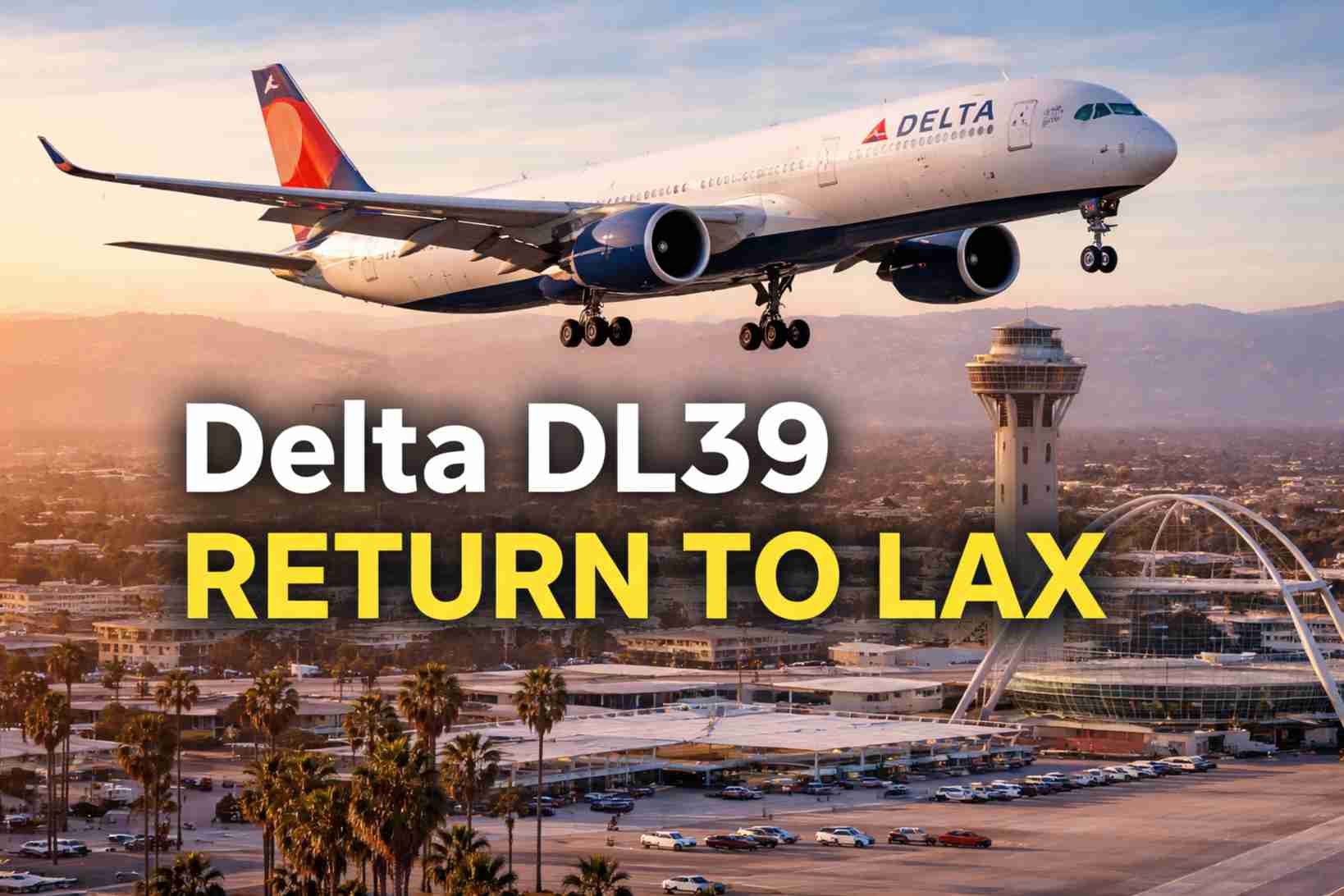
Long international flights are planned very carefully. Airlines plan the route, fuel, crew time, and safety steps before the plane even leaves the airport. When a long flight turns around in the middle of the ocean and goes back to where it started, it is a rare event.
This is what happened to Delta flight DL39, which was flying from Los Angeles (LAX) to Shanghai (PVG). The plane flew for many hours over the Pacific Ocean and then returned to Los Angeles. Many people called it a “flight to nowhere” because the passengers ended up back at the same airport.
This article explains what Delta DL39 is, what happened on the flight, why planes return to the airport, and what this event means for passengers and airlines.
What Is Delta DL39?
Delta DL39 is a long international flight. It connects the United States and China.
Basic Information About DL39
| Item | Details |
|---|---|
| Airline | Delta Air Lines |
| Flight Number | DL39 |
| From | Los Angeles (LAX) |
| To | Shanghai Pudong (PVG) |
| Plane Type | Airbus A350 |
| Flight Type | Long international flight |
| Flight Time | About 12 to 14 hours (normal) |
This flight crosses the Pacific Ocean. There are not many airports in the middle of the ocean, so safety planning is very important.
What Happened on the Flight?
The plane took off from Los Angeles as planned. After flying for several hours over the ocean, the pilots decided to turn the plane around and go back to Los Angeles.
This meant that:
-
Passengers were on the plane for many hours
-
The plane did not reach Shanghai
-
Everyone landed back at LAX
Simple Timeline
| Step | What Happened |
|---|---|
| 1 | Plane left Los Angeles |
| 2 | Plane flew over the Pacific Ocean |
| 3 | Problem happened on the plane |
| 4 | Pilots decided to return to LAX |
| 5 | Plane landed back in Los Angeles |
| 6 | Passenger causing trouble was removed |
| 7 | Flight was prepared to leave again later |
Why Did the Plane Return to LAX?
Reports said the flight returned because of a disruptive passenger. This means a passenger was causing serious trouble on the plane.
Airlines take safety very seriously. If someone is acting in a dangerous or threatening way, the pilots may decide that it is safer to land the plane as soon as possible.
Common Reasons Planes Turn Back
Planes can return to the airport for many reasons, such as:
-
A passenger becomes very sick
-
A passenger causes trouble or becomes violent
-
There is a problem with the plane
-
There is smoke or a strange smell
-
Bad weather at the destination
-
Crew members reach their work time limit
In this case, the main reported reason was passenger behavior.
Read also: United Flight UA109 Diversion
Why Didn’t the Plane Land at Another Airport?
Some people ask why the plane did not land at another airport instead of going all the way back to Los Angeles. Over the Pacific Ocean, there are very few big airports that can handle a large international plane with many passengers.
Going back to LAX was safer and easier to manage.
Return to LAX vs. Landing Somewhere Else
| Factor | Return to LAX | Land at Another Airport |
|---|---|---|
| Airline staff | Full Delta staff available | Limited or no Delta staff |
| Police and security | Easy access in Los Angeles | May be harder in another country |
| Plane maintenance | Full service at LAX | Limited service |
| Passenger help | Hotels and rebooking easier | More difficult |
| Language and rules | Familiar to airline and crew | Different laws and languages |
Because of these reasons, going back to the starting airport is sometimes the best choice.
What Happens When a Plane Turns Back?
Turning back a long flight causes many problems for the airline.
Problems for the Plane
-
The plane may be too heavy to land because of extra fuel
-
The crew may need to fly around to burn fuel
-
The plane may need safety checks after landing
Problems for the Crew
-
Pilots and crew have work time limits
-
They may need rest before flying again
-
New crew may be needed for the next flight
Problems for the Airline
-
The plane is now late for other flights
-
Other flights may be delayed or canceled
-
The airline must reorganize its schedule
Simple View of the Impact
| Area Affected | What Happens |
|---|---|
| Plane | Delays and safety checks |
| Crew | Work time limits, need for rest |
| Passengers | Long delays and new flight plans |
| Airline | Schedule problems and extra costs |
What Was the Passenger Experience Like?
For passengers, this kind of situation is very tiring and stressful. People may have:
-
Spent many hours sitting on the plane
-
Felt confused about what was happening
-
Missed connecting flights
-
Missed work, family events, or plans
What Airlines Usually Do for Passengers
Airlines often try to help passengers by:
-
Booking them on another flight
-
Giving hotel rooms for long delays
-
Providing food or meal vouchers
-
Giving customer service support
The exact help depends on the airline’s rules and the situation.
How Much Does This Cost the Airline?
Turning a large plane back after hours in the air is very expensive.
Main Costs for the Airline
-
Fuel used during the flight
-
Extra pay and hotels for crew
-
Passenger hotels and rebooking
-
Delays to other flights
-
Plane maintenance checks
Simple Cost Table
| Cost Type | Level of Cost |
|---|---|
| Fuel | Very high |
| Crew costs | High |
| Passenger care | Medium |
| Schedule changes | Medium–high |
| Reputation | Hard to measure |
Even though it costs a lot of money, airlines choose safety first.
What Does This Event Show About Air Safety?
This event shows that safety rules work. Pilots and airlines are trained to make hard choices when something goes wrong.
What We Learn From This Event
-
Safety is more important than being on time
-
Pilots can decide to turn back if needed
-
Airlines are ready for rare problems
-
Passenger safety comes first
Even though these events are rare, they show that airlines take problems seriously.
Key Points Summary
Main Facts
-
Delta DL39 was flying from Los Angeles to Shanghai
-
The plane turned back over the Pacific Ocean
-
The reported reason was a disruptive passenger
-
The plane landed back at LAX
-
The passenger causing trouble was removed
-
The flight was planned to continue later
Final Thoughts
The Delta DL39 return to Los Angeles was unusual, but it shows how airlines put safety first. For passengers, it was a long and frustrating experience. For the airline, it was costly and difficult to manage.
However, events like this remind us that flying is built on safety rules and careful decisions. When something serious happens in the air, pilots and airlines choose the safest option—even if it means turning around after many hours of flight.